The Science Behind Mechatronic Assistive Devices in Gait Training
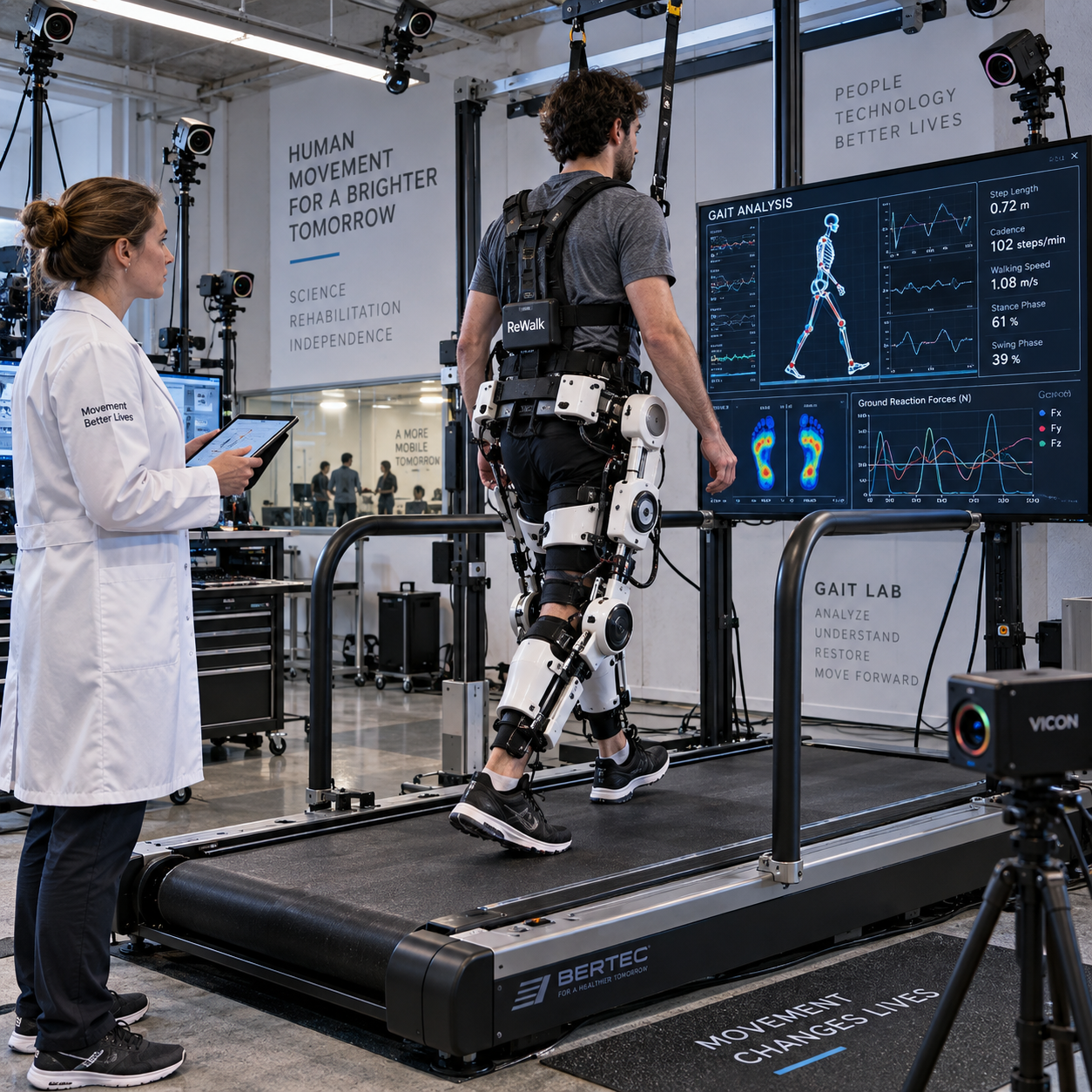
Mechatronic assistive devices combine mechanical structures, electronics, sensors, and software to help a person practice walking. In gait training research, their value lies in delivering carefully controlled, repeatable assistance while clinicians and researchers measure how the user responds.
That distinction matters. A device can make a step possible during a session, yet immediate assistance does not automatically produce lasting improvement. Effective rehabilitation depends on the interaction between device design, the biomechanics of walking, task-specific practice, motor learning, and therapist-led clinical judgment.
What Are Mechatronic Assistive Devices?
Mechatronic assistive devices are walking-support systems that integrate mechanics, electronics, sensors, actuators, and control software to influence movement. They may be worn on the body, attached to a treadmill, or combined with a body-weight-support system.
The mechanical side provides the frame, joints, braces, belts, or linkages that align with the user’s limbs. Electronics collect and process information, while software determines when and how much assistance to apply. This creates a closed loop: the device observes movement, compares it with a desired gait pattern, and produces a timed response.
Major categories include:
- Robotic exoskeletons, which use powered joints around the hip, knee, or ankle to assist the wearer.
- Powered lower-limb orthoses, which provide assistance at one or more joints while also stabilizing or positioning the limb.
- End-effector gait trainers, which guide the feet through stepping patterns from platforms beneath the shoes.
- Body-weight-support and treadmill systems, which reduce loading demands and create a controlled walking environment.
These systems differ in how much of the leg they control and how closely they allow natural movement. A rigid exoskeleton can apply precise joint torque, but alignment and comfort become critical. A less restrictive orthosis may preserve more voluntary movement, although it can provide less consistent mechanical guidance.
How These Devices Support Human Gait
Mechatronic devices support human gait by assisting joint motion, weight transfer, balance, propulsion, and repeated stepping at selected points in the gait cycle. The assistance is usually designed around a functional walking task rather than isolated muscle strengthening.
Walking involves coordinated stance and swing phases. During stance, the limb accepts body weight, controls the knee, and contributes to forward progression. During swing, the leg advances and the foot must clear the ground. A device may extend the knee for stability, lift the foot during swing, assist hip flexion, or support ankle push-off.
Support can also be graded. Early in neurological rehabilitation, a person may need substantial help to complete a safe step. As control improves, the system can reduce torque, body-weight support, or trajectory guidance. This progression encourages the user to contribute more of the movement.
The central training principle is task-specific repetition. Repeated stepping exposes the nervous system to consistent sensory and mechanical information. However, repetition only becomes meaningful when the assistance allows appropriate effort, timing, and adaptation. If the device moves the legs while the user remains passive, the session may produce many steps without providing the challenge needed for motor learning.
Human–robot interaction therefore depends on calibration. Assistance must be strong enough to prevent unsafe collapse or inefficient movement, yet limited enough to preserve voluntary control. Researchers often describe this approach as assist-as-needed control.
The Role of Sensors, Actuators, and Control Systems
Sensors detect limb position, force, pressure, speed, and user effort; actuators generate the mechanical force; and control algorithms adjust assistance in real time. Together, these components determine whether a device feels responsive or restrictive.
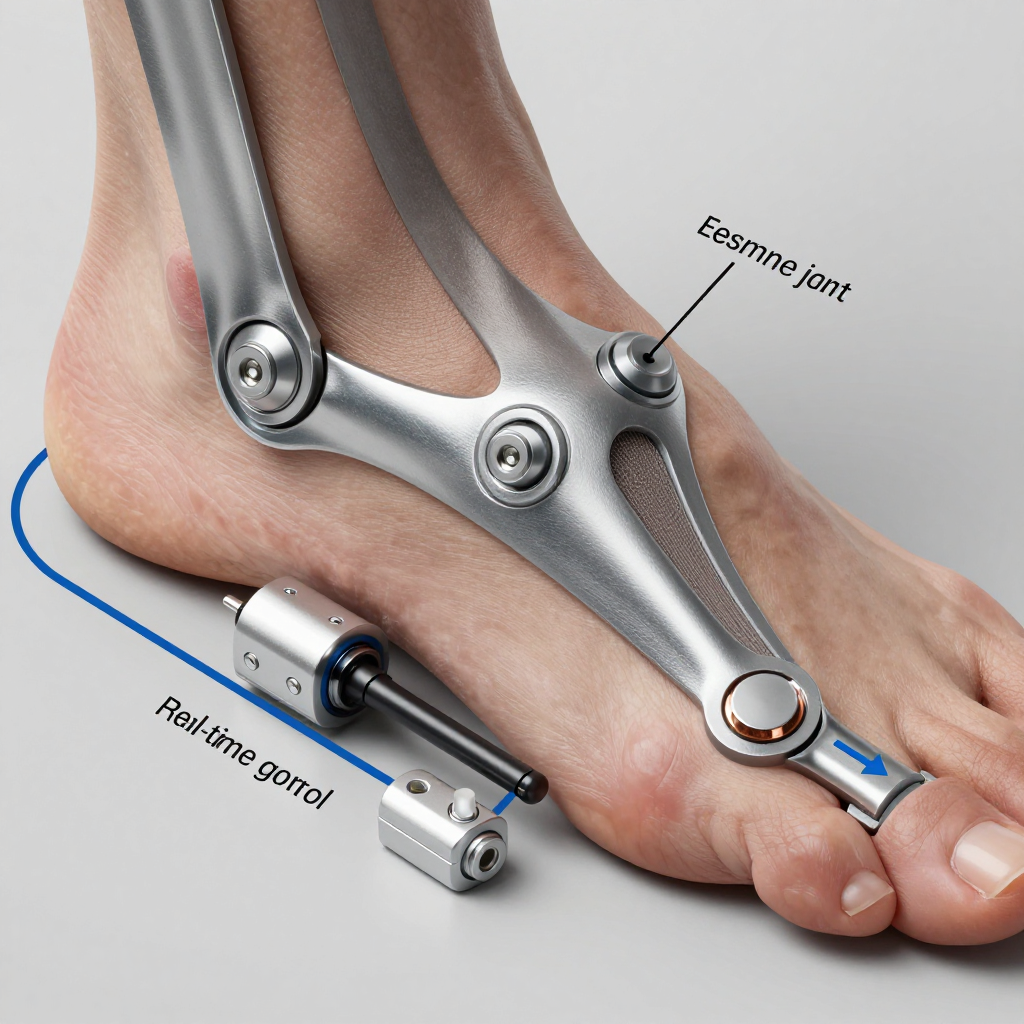
Common sensors include joint encoders, inertial measurement units, foot-pressure sensors, force sensors, and electromyography systems that record muscle activity. Pressure beneath the foot can help identify heel contact and toe-off. Joint encoders estimate limb angles, while inertial sensors track segment motion when external cameras are unavailable.
Actuators convert electrical energy into torque or linear force. Electric motors are common because they allow accurate control, although they add weight and require power management. Some systems use elastic elements to store and release energy, potentially improving comfort and making assistance more compliant.
The control system interprets sensor data through algorithms that may follow a desired joint trajectory, regulate torque, respond to detected gait phases, or estimate the user’s intention. A position-based controller tries to guide the limb toward a predefined movement. A torque-based controller instead supplies a measured rotational force, which may permit more natural variation.
Advanced systems combine several signals. For example, a controller might identify the transition from stance to swing using foot pressure, joint angle, and timing. It can then deliver ankle or hip assistance only during the relevant phase. This reduces unnecessary intervention and supports more natural human–robot interaction.
Control quality is judged by more than technical accuracy. A smooth response, low delay, correct timing, and comfortable force profile may matter more to gait quality than strict tracking of a reference trajectory. The device must also fail safely when sensors provide conflicting or incomplete information.
Applications in Gait Training Research
Gait training research uses mechatronic assistance to study how controlled practice affects mobility, biomechanics, and recovery in people with neurological or musculoskeletal impairments. Devices are especially useful when researchers need repeatable conditions and adjustable levels of support.
Applications include rehabilitation after stroke, spinal cord injury, traumatic brain injury, multiple sclerosis, and other conditions associated with weakness, spasticity, impaired balance, or poor coordination. The device may help a participant practice stepping for longer than would otherwise be possible, while therapists monitor fatigue, alignment, and safety.
Research protocols can manipulate important training variables:
- The amount and timing of joint assistance.
- The speed, incline, or sensory context of walking.
- The level of body-weight support.
- The degree of therapist involvement.
- The transition from guided movement to voluntary movement.
This experimental control helps separate different explanations for improvement. A person may walk faster because the device supplies propulsion, because balance has improved, or because the nervous system has learned a more efficient coordination pattern. Testing without the device, measuring retention after practice, and observing performance in different environments can clarify whether change extends beyond the training session.
Mechatronic systems also support research into biomechanics of walking. They can measure joint angles, ground reaction forces, timing, and mechanical work while applying a known intervention. Still, laboratory results may not transfer directly to community walking. Treadmill stepping, harness support, and a predictable robotic trajectory can differ substantially from turning, avoiding obstacles, or walking outdoors.
Measuring Effectiveness and Motor Learning
Effectiveness in robotic gait training is evaluated with gait outcomes, clinical measures, biomechanical data, and evidence that improvements persist after assistance is removed. No single measure captures walking ability or motor learning completely.
Frequently assessed outcomes include:
- Gait speed, often measured over a short walkway or timed distance.
- Step length, cadence, stance and swing timing, and step symmetry.
- Joint kinematics and kinetics, including hip, knee, and ankle motion.
- Muscle activity recorded with electromyography.
- Walking endurance, such as distance covered during a timed test.
- Balance, postural control, transfers, and fall-related measures.
- Functional independence, perceived exertion, comfort, and user confidence.
The key research question is whether the person can perform better independently. Immediate device-assisted gait may look improved because the robot supplies missing torque. A stronger indicator of motor learning is a change in unsupported or minimally assisted walking that remains after a delay and transfers to a different task.
Researchers therefore distinguish performance from learning. Performance describes what happens during practice. Learning requires relatively durable change, often examined through retention tests, transfer tasks, and follow-up assessments. The distinction prevents overestimating a device’s rehabilitation effect.
Reporting should also include the training dose, assistance level, adverse events, dropout rates, and participant characteristics. These details help readers interpret findings and compare studies. Guidance from organizations such as the National Institute of Neurological Disorders and Stroke can provide broader clinical context for neurological recovery, but device-specific conclusions still require appropriately designed trials.
Benefits, Limitations, and Safety Considerations
Mechatronic gait assistance can provide intensive, measurable, and adjustable practice, but its benefits depend on patient selection, device configuration, and clinical supervision. The technology supports rehabilitation; it does not replace assessment by a qualified therapist or medical team.
Potential benefits include:
- High repetition with consistent timing and movement conditions.
- Adjustable assistance that can respond to changing ability.
- Reduced physical demand on therapists during selected training tasks.
- Objective recording of gait performance and device settings.
- Opportunities to practice walking when unsupported stepping is initially unsafe.
Those advantages come with practical limitations. Device weight can increase effort, especially during swing. Rigid frames may restrict natural foot placement or compensatory strategies. Setup can take time, and equipment, maintenance, and trained staff may be expensive. A system optimized for a treadmill may also provide limited preparation for uneven ground or daily-life mobility.
Over-assistance is a major design and clinical concern. When the system supplies too much torque, the user may reduce muscle effort or fail to explore useful movement solutions. The correction is progressive calibration: begin with the minimum support needed for safe, functional practice and reduce it as control improves.
Safety procedures should address skin pressure, joint alignment, falls, fatigue, pain, abnormal tone, and equipment malfunction. Therapists should check fit before walking, monitor physiological and behavioral signs during practice, and stop when symptoms indicate risk. Contraindications and precautions vary by device and diagnosis, so manufacturer instructions and clinical protocols must guide use.
Future Directions for Mechatronic Gait Assistance
The future of mechatronic gait assistance will focus on personalized control that detects user intent, adapts support continuously, and preserves natural movement. Researchers are moving toward systems that respond to the person’s changing capacity rather than repeatedly applying the same assistance profile.
Promising priorities include:
- Intent detection using pressure, inertial, muscle, and interaction-force signals.
- Adaptive assistance that increases or decreases support according to effort and success.
- Control strategies that personalize timing, joint torque, and gait variability.
- Integration with clinical assessment platforms and remote data collection.
- More compact, comfortable, and energy-efficient actuators.
- Testing across real-world tasks, including turns, ramps, obstacles, and community walking.
A useful design target is transparent assistance: the device should help when necessary and become less noticeable when the user can contribute. Achieving that goal requires better models of human–robot interaction, reliable safety limits, and outcome measures that capture confidence and independence as well as speed.
Future studies will also need to connect engineering variables with rehabilitation mechanisms. The most informative question is rarely whether a robot can move a limb. It is whether a particular pattern of assistance produces safer practice, better motor learning, and meaningful improvements in daily mobility for a defined group of people.
Frequently Asked Questions
How do mechatronic devices assist walking?
They use sensors to detect gait phase and movement, actuators to provide force, and control software to coordinate assistance at the hip, knee, ankle, or foot. Support may improve stability, limb clearance, weight transfer, or propulsion.
What is the difference between a robotic exoskeleton and a powered orthosis?
A robotic exoskeleton usually spans and supports several limb segments with powered joints. A powered orthosis typically focuses on one or more joints while functioning as a brace. The boundary can vary because terminology differs across research and clinical settings.
Can these devices improve motor learning?
They can create conditions that support motor learning, especially through repetitive, task-specific practice and adjustable assistance. Lasting improvement is not guaranteed; it must be demonstrated through unsupported performance, retention, and transfer assessments.
What outcomes are measured in robotic gait training research?
Studies commonly measure gait speed, step symmetry, cadence, joint kinematics, muscle activity, walking endurance, balance, functional independence, comfort, and adverse events. Retention and transfer tests help distinguish learning from temporary device assistance.
What are the main limitations of device-assisted gait training?
Important limitations include device weight, discomfort, cost, setup time, restricted movement, over-assistance, limited ecological validity, and the need for trained clinical supervision. Results from treadmill practice may not fully represent everyday walking.