Case Studies: Successful Implementation of Gait Training in Clinical Settings
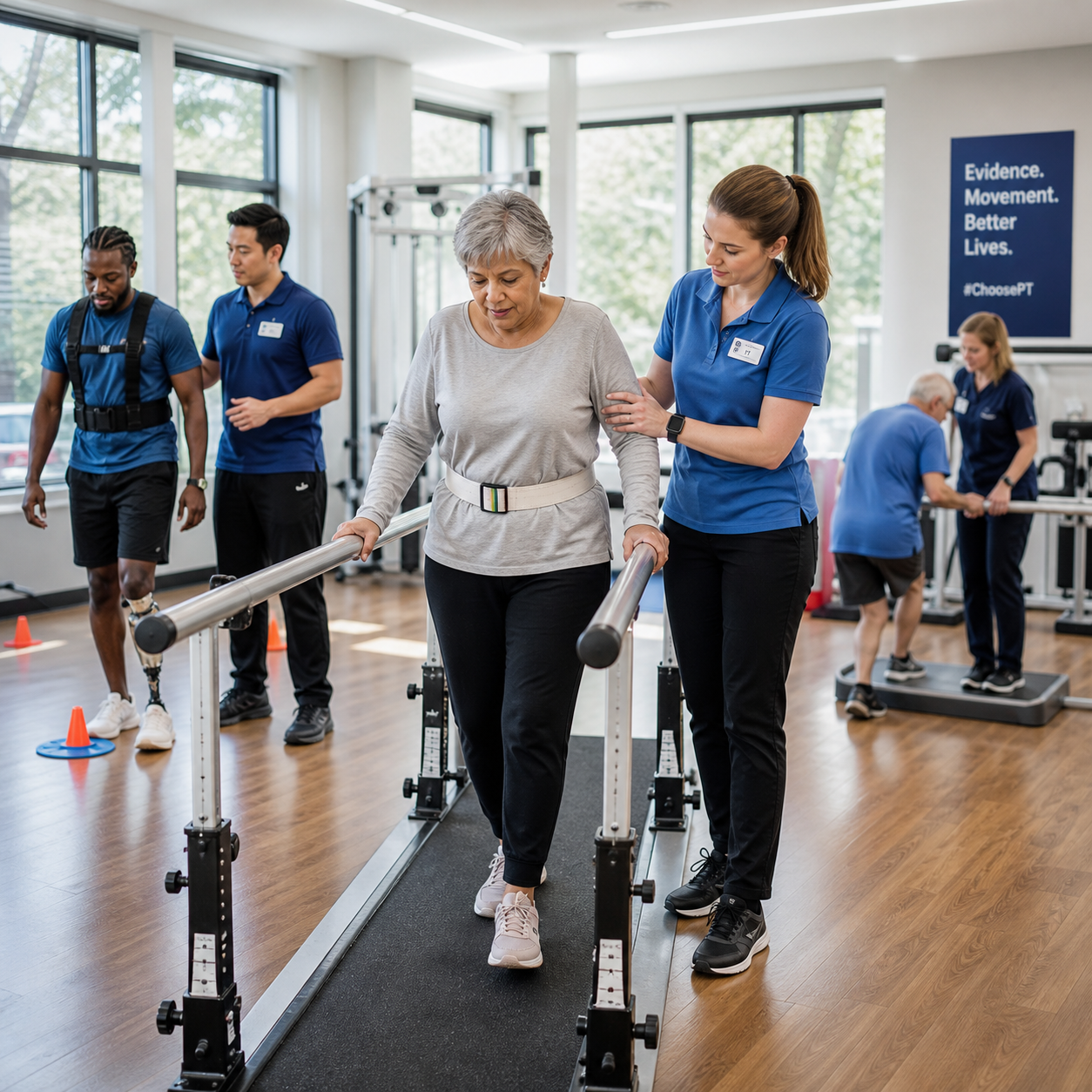
Gait training helps people improve walking quality, balance, endurance, and confidence after neurological or musculoskeletal impairment. In clinical rehabilitation, successful programs combine task-specific practice with careful assessment, progressive challenge, and goals that matter in daily life.
Why Gait Training Matters in Clinical Rehabilitation
Gait training is structured practice designed to improve walking, mobility, and safe participation in everyday activities. It may include overground walking, balance exercises, body-weight-supported treadmill training, cueing, strengthening, and technology-assisted practice.
The approach is especially relevant to neurological rehabilitation, where stroke, spinal cord injury, Parkinson’s disease, and cerebral palsy can affect strength, coordination, motor control, balance, and endurance. A therapist may work on foot clearance, step timing, gait symmetry, turning, transfers, or walking on different surfaces.
Implementation matters as much as intervention selection. A treadmill or robotic device cannot replace clinical reasoning. The team must decide how much assistance the patient needs, how long the person can train safely, and when to increase task difficulty. Evidence from a controlled study can inform practice, but clinicians still need to adapt the protocol to staffing, equipment, fatigue, cognition, and patient goals.
For clinicians reviewing research, resources from the National Institute of Neurological Disorders and Stroke provide useful background on neurological conditions that commonly affect walking.
How to Evaluate a Successful Gait-Training Program
A successful gait-training program produces measurable improvement in walking performance, safety, independence, or participation while maintaining acceptable fatigue and risk. No single test captures every meaningful change, so clinicians should combine standardized measures with patient-reported goals.
Useful outcomes include:
- Walking speed: Timed tests such as the 10-Meter Walk Test can show changes in household or community mobility.
- Endurance: The six-minute walk test may indicate whether gains carry over to sustained activity.
- Balance and adaptability: Functional gait assessment examines walking under conditions such as head turns, speed changes, narrow support, and obstacle negotiation.
- Symmetry and quality: Video review, step-length comparison, cadence, and stance-time analysis can identify changes that speed alone misses.
- Independence: Document assistance level, device use, transfers, falls, and ability to walk in relevant environments.
- Participation: Ask whether the patient can reach the bathroom, attend school, return to work tasks, or move around the community more confidently.
Assessment should occur at baseline, during progression, and at discharge or review. A faster walking speed is valuable, but it may not represent success if the patient requires excessive exertion or loses balance. A practical framework is to track capacity, control, and carryover: what the patient can do in testing, how safely and efficiently they do it, and whether the improvement appears outside therapy.
Case Study 1: Gait Training After Stroke
After stroke, gait training is most useful when it targets the patient’s specific walking limitations and links repeated practice to daily mobility goals. The following is an illustrative clinical scenario, not a report of a single published patient.
Patient profile and clinical goals
A 62-year-old adult six weeks after a unilateral stroke demonstrates reduced walking speed, left-sided weakness, poor foot clearance, and instability when turning. The patient walks short household distances with a cane and contact-guard assistance. The shared goals are to walk safely to the kitchen, manage turns, and reduce reliance on family members.
Intervention and progression
The therapist begins with repeated overground walking, weight-shifting, sit-to-stand practice, and stepping over low targets. A treadmill is introduced when the patient can maintain upright alignment with appropriate guarding. If partial body-weight support is used, the harness reduces fear and fall risk while allowing more steps, but it does not automatically reproduce normal overground walking.
Training intensity is adjusted through walking duration, rest intervals, speed, surface, and assistance. The therapist may use visual floor markings or rhythmic cues for step length, then gradually remove them. Progression occurs when the patient maintains foot clearance and trunk control across several sessions, rather than after one unusually strong performance.
Measures, outcomes, and lessons
The team records 10-meter walking speed, walking distance, functional gait assessment items, assistance level, fatigue, and the patient’s ability to turn toward the affected side. In this illustrative case, improvement would be judged by a combination of faster or more consistent walking, safer turning, reduced physical assistance, and reliable household carryover.
The transferable lesson is to make repetition purposeful. Stroke recovery programs work best when treadmill or overground practice supports a functional objective, includes therapist feedback, and progresses toward the environments the patient must actually navigate.
Case Study 2: Gait Training for Spinal Cord Injury or Neurological Conditions
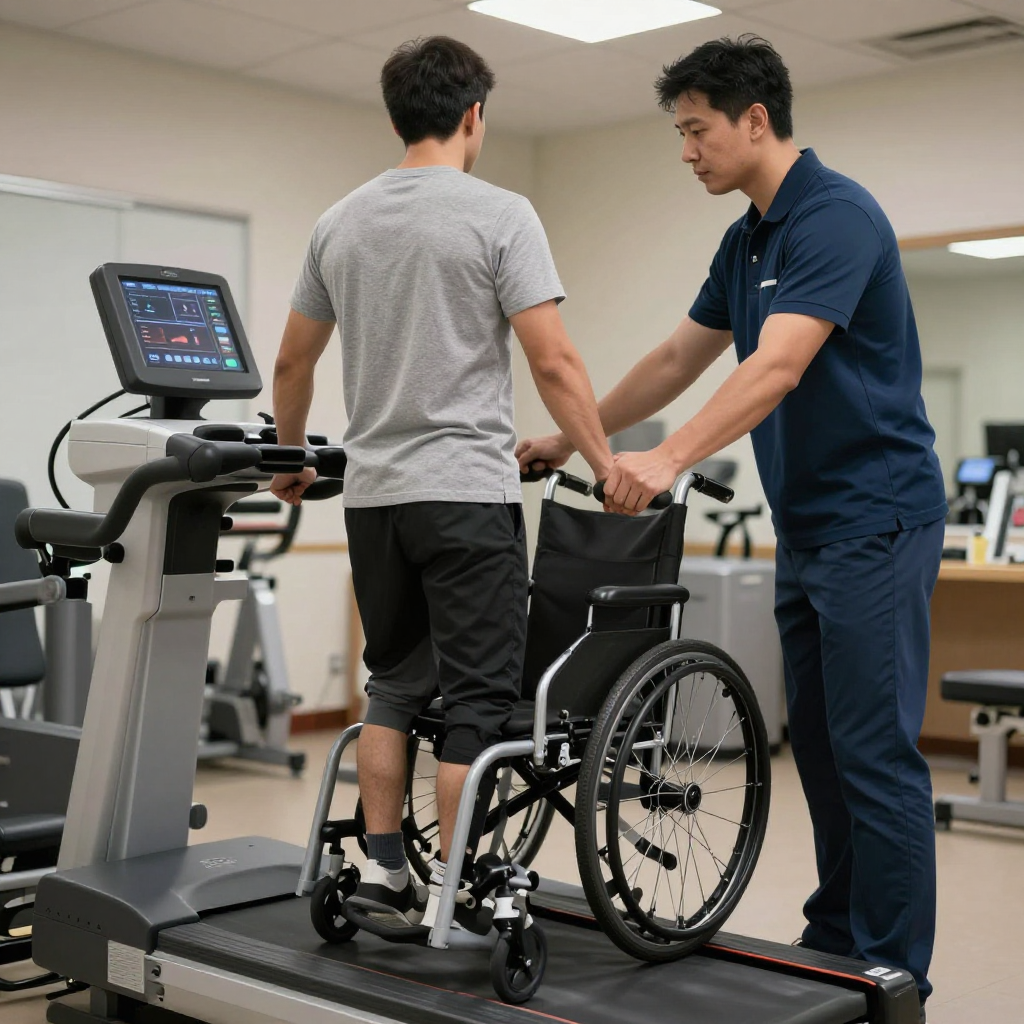
For spinal cord injury and other neurological conditions, gait training should fit the person’s neurological level, strength, sensation, medical status, and realistic mobility goals. Body-weight-supported and robotic-assisted gait training can increase structured stepping, but they should complement strength work, transfers, wheelchair skills, and independent mobility training.
Consider a person with incomplete spinal cord injury who has emerging voluntary leg movement but cannot yet sustain unsupported walking. The rehabilitation team may use a harness-supported treadmill to practice reciprocal stepping while monitoring blood pressure, skin integrity, joint range, pain, and fatigue. Manual assistance can help the therapist shape knee control or foot placement. A robotic device may provide more consistent stepping when the patient cannot generate enough force for repeated practice.
The clinical question is not whether a device is advanced. It is whether the device creates useful practice that the patient could not safely achieve otherwise. As strength and control improve, assistance should be reduced where appropriate, and training should shift toward overground walking, turns, obstacles, stairs, and the selected assistive device.
For Parkinson’s disease, external cues, amplitude-focused movement, turning practice, and dual-task assessment may be more relevant than simply increasing treadmill time. For other neurological conditions, clinicians may prioritize energy conservation, fall prevention, or maintenance of mobility.
Outcomes can include walking speed, six-minute walk distance, balance scores, assistance level, number of steps completed with active participation, and confidence in daily mobility. Limitations must be recorded: robotic or harness systems can require substantial staff time, may limit natural balance reactions, and may not be available in smaller clinics. The broader lesson is to pair technology with a clear progression plan and a defined endpoint for reducing assistance.
Case Study 3: Pediatric or Long-Term Mobility Rehabilitation
Pediatric gait training is most effective when it supports developmental participation, preserves motivation, and connects walking practice with home, school, and play. In cerebral palsy, goals may include safer transfers, improved endurance, reduced falls, greater walking efficiency, or continued use of a preferred mobility method.
An example is a school-aged child with spastic diplegic cerebral palsy who walks with a walker, tires quickly, and avoids uneven ground. The team begins by identifying meaningful situations: moving between classrooms, standing during play, and walking short distances outdoors. Sessions combine overground practice, stepping games, balance tasks, strengthening, and carefully selected treadmill work. An ankle-foot orthosis or walker may improve alignment and safety, but the device should be reviewed regularly as the child grows and movement patterns change.
Progress can be measured through walking distance, time spent upright, gait speed, falls, caregiver assistance, participation at school, and the child’s own report of effort. Video feedback and simple visual goals can make practice more understandable. Short, varied tasks often produce better engagement than a long sequence of repetitive drills.
Long-term rehabilitation also requires honest goal setting. A child may improve endurance and participation without developing fully independent walking. That outcome can still be clinically meaningful. The mistake is treating one mobility outcome as the only marker of success. Family priorities, comfort, energy use, and access to efficient alternative mobility all belong in the plan.
Common Implementation Challenges and Practical Solutions
Clinical gait-training barriers are usually solved through planning, shared documentation, and flexible progression rather than through equipment alone. Teams should anticipate the following problems.
- Limited staffing or equipment: Use a tiered pathway. Reserve body-weight support or robotic-assisted gait training for patients who need it most, while using parallel bars, overground circuits, stairs, and assistive devices for other patients.
- Fatigue and fluctuating performance: Record perceived exertion, rest needs, vital signs when indicated, and movement quality. Reduce speed or assistance demands when fatigue causes unsafe compensation.
- Protocol adherence: Document dose in practical terms, including minutes walking, number of bouts, assistance level, cues, and rest periods. This makes sessions comparable across therapists.
- Safety and falls: Complete medical and fall-risk screening, inspect harness contact areas, check footwear and orthoses, and establish clear guarding procedures. Safety should be reassessed when the task or environment changes.
- Poor carryover: Practice turns, obstacles, transfers, and home-specific routes. A patient who performs well on a treadmill may still need direct training in a crowded hallway or outdoor setting.
Interdisciplinary coordination is essential. Physiotherapists, occupational therapists, physicians, nurses, orthotists, speech-language professionals, and caregivers may each identify barriers that are invisible during a single therapy session.
Lessons for Designing a Clinic-Based Gait-Training Pathway
A clinic-based gait-training pathway should connect patient selection, measurable goals, progressive practice, safety checks, and outcome review. The following sequence provides a practical starting point.
- Screen and stratify: Identify diagnosis, medical precautions, cognition, sensation, strength, balance, fatigue, falls, and current mobility method.
- Define the target: Write goals in functional terms, such as walking 50 meters to a dining room, turning safely, or reducing caregiver assistance.
- Choose the least restrictive effective method: Begin with therapist-led overground practice when safe. Add treadmill, body-weight support, cueing, orthoses, or robotics when these tools solve a specific clinical problem.
- Set progression criteria: Increase distance, speed, complexity, or independence only when movement quality and safety remain acceptable across repeated sessions.
- Measure and review: Combine walking speed, endurance, functional gait assessment, assistance level, falls, fatigue, and participation outcomes.
- Plan carryover: Teach caregivers, coordinate with the wider team, and practice the environments that determine real-world independence.
Research findings become useful in everyday clinical rehabilitation when clinicians preserve the intervention’s active ingredient, usually repeated task-specific stepping, while adapting its delivery to the patient and setting. Technology can increase practice opportunities; therapist observation determines whether those opportunities are producing better control and meaningful mobility.
Frequently Asked Questions About Clinical Gait Training
What is gait training in clinical rehabilitation?
Gait training is supervised practice that targets walking pattern, balance, strength, endurance, coordination, and safe functional mobility. It may use overground exercises, treadmills, cues, assistive devices, or technology.
Which patients may benefit from gait training?
People recovering from stroke, spinal cord injury, Parkinson’s disease, cerebral palsy, and other neurological or mobility-limiting conditions may benefit. Suitability depends on medical stability, goals, ability to participate, and safety needs.
How is gait-training success measured?
Clinicians commonly measure walking speed, endurance, balance, gait symmetry, assistance level, falls, fatigue, and participation. Functional gait assessment can help evaluate walking under changing task demands.
What role do treadmills, body-weight support, and robotic devices play?
They can provide controlled, repeatable stepping and reduce the physical demands of early practice. Their value depends on active patient participation, appropriate progression, therapist oversight, and carryover to overground mobility.
How can gait training be adapted to individual patient needs?
Adjust speed, duration, rest periods, assistance, cues, orthoses, walking surface, and task complexity. Progress according to safety, movement quality, fatigue, and the patient’s real-world goals rather than a fixed protocol alone.