Benefits of Gait-Training Devices for Seniors: Improving Mobility and Preventing Falls
Why Gait Health Matters as We Age
Walking is one of the most complex motor tasks the human body performs — and one of the first to deteriorate with age. By their mid-seventies, a significant proportion of older adults show measurable changes in stride length, walking speed, and postural control, long before any single diagnosis triggers a clinical intervention.
The consequences are serious. Falls are the leading cause of injury-related death among adults over 65, according to the World Health Organization, and most falls happen during ordinary activities like walking to the kitchen or stepping off a curb. What looks like a simple stumble is often the result of months or years of gradual gait decline — reduced muscle strength, slower reflexes, and diminished proprioception working together against the person.
Beyond physical injury, the fear of falling creates its own cycle of harm. Seniors who have fallen once often restrict their movement to avoid falling again, which accelerates deconditioning and makes the next fall more likely, not less. Addressing gait health early — before a fall occurs — is both a medical priority and a quality-of-life imperative.
What Are Mechatronic Gait-Training Devices?
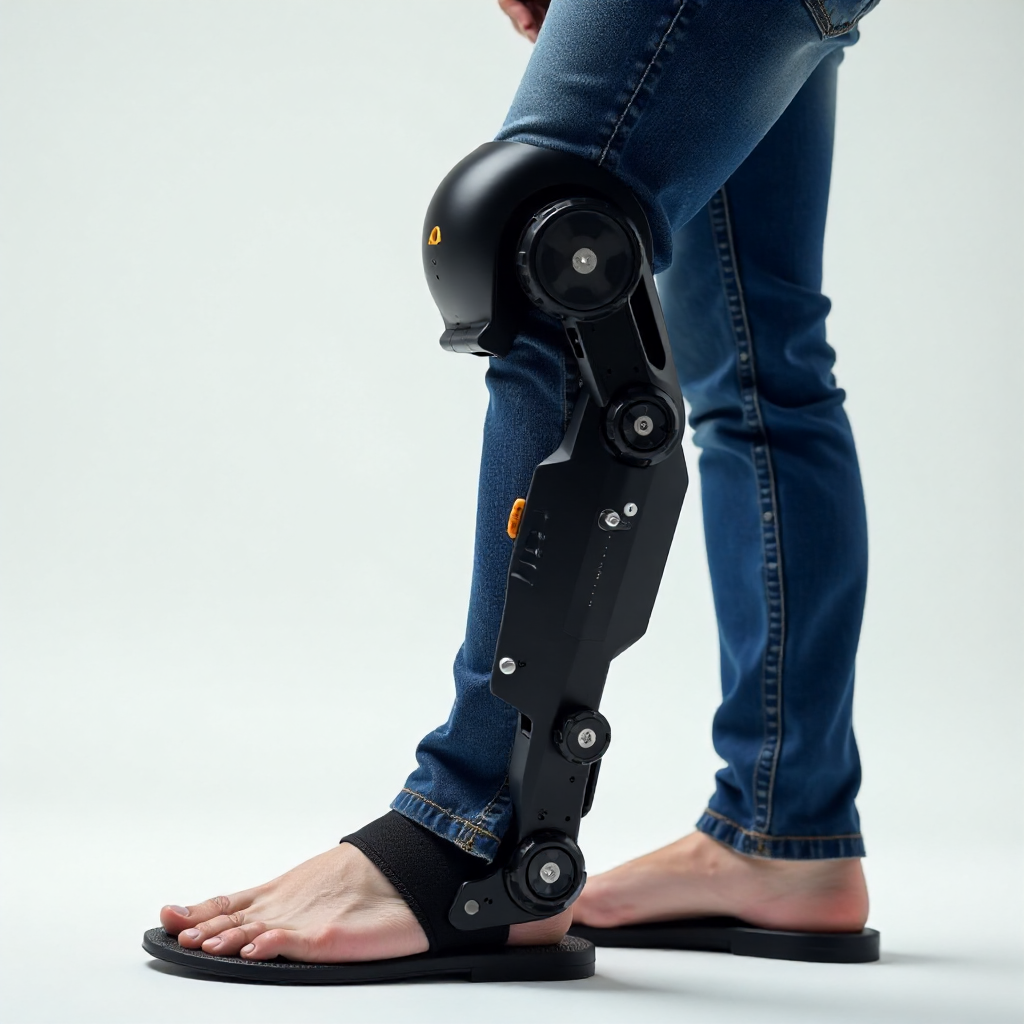
Mechatronic gait-training devices are assistive systems that combine mechanical engineering, electronics, and software to guide, support, or augment a person's walking pattern. Unlike a standard walking frame or cane, these devices actively interact with the user's movement in real time.
The term "mechatronic" reflects this integration: sensors detect the user's motion and intent, actuators respond by providing targeted support or resistance, and onboard software adjusts parameters based on the individual's gait profile. Some systems are worn directly on the body as wearable exoskeletons, while others are treadmill-based platforms with harness support. Both approaches share the same core principle — structured, repetitive, assisted movement that trains the neuromuscular system rather than simply compensating for its deficits.
This is what separates mechatronic gait trainers from traditional walking aids. A cane offloads weight. A robotic gait-training device teaches the body to carry that weight again.
Key Physical Benefits of Gait Training for Older Adults
Regular use of gait-training devices produces measurable physical improvements across several interconnected systems. The benefits are not cosmetic — they reflect genuine neurological and musculoskeletal adaptation.
- Improved balance and stability: Repetitive, guided stepping activates the proprioceptive pathways that tell the brain where the body is in space. Over time, this recalibrates postural control and reduces the micro-instabilities that precede a fall.
- Muscle strength and coordination: Device-assisted walking engages hip flexors, quadriceps, and ankle stabilizers in a coordinated sequence that passive exercise cannot replicate. The pattern matters as much as the load.
- Gait symmetry and stride quality: Many older adults develop compensatory walking patterns after injury or illness. Mechatronic devices can enforce symmetrical movement, gradually retraining the body toward a safer, more efficient gait.
- Neuroplasticity and motor relearning: The brain retains the capacity to reorganize motor pathways well into old age. Consistent, task-specific practice — exactly what device-assisted gait training provides — is the most effective stimulus for this kind of neural adaptation.
The underlying science here draws from decades of rehabilitation research. Repetitive movement therapy is not a new concept, but mechatronic systems allow it to be delivered with a precision and consistency that human-assisted therapy alone cannot always achieve.
How Gait-Training Devices Reduce Fall Risk
Gait-training devices reduce fall risk by directly targeting the biomechanical and neurological deficits that cause falls in the first place. This is a more targeted intervention than general fitness programs, which improve overall health but may not address the specific failure modes behind a fall.
Most falls in older adults occur during dynamic balance challenges — a moment when the center of mass moves outside the base of support and the body fails to recover in time. The recovery depends on reaction speed, muscle activation timing, and the brain's ability to process vestibular and proprioceptive signals simultaneously. Each of these can be trained.
Device-assisted gait training creates controlled, repeatable situations where the body practices exactly these recovery mechanisms. The harness or exoskeleton provides a safety margin during training, allowing seniors to experience and respond to mild instability without the risk of an actual fall. Over weeks of practice, the nervous system becomes faster and more reliable at triggering the right response.
There is also a secondary benefit: improved gait quality reduces the energy cost of walking. Seniors who walk more efficiently are less likely to fatigue, and fatigue is a well-documented fall risk factor, particularly in the late afternoon and evening hours.
Independence, Confidence, and Quality of Life
The benefits of gait training extend well beyond clinical measurements of stride length or balance scores. For many older adults, the most meaningful outcome is the ability to move through daily life with confidence.
Fear of falling is a psychological condition in its own right, distinct from actual fall risk, and it affects roughly one in three community-dwelling seniors who have previously fallen. It leads to social withdrawal, reduced physical activity, and a measurable decline in self-reported wellbeing. Gait-training programs that produce tangible improvements in stability give participants a concrete, experience-based reason to trust their own bodies again.
Mobility independence — the ability to walk to the shops, visit family, or simply move between rooms without assistance — is consistently ranked among the top priorities by older adults themselves. Rehabilitation research shows that restored mobility correlates strongly with reduced depression, better sleep, and higher overall life satisfaction. The device is a means to that end, not the end itself.
The Role of Research: FP7 and the Science Behind the Technology
Evidence-based validation is what separates promising technology from proven intervention. The FP7 research framework, funded by the European Commission, has supported structured scientific investigation into mechatronic gait-training systems specifically designed for fall prevention in elderly populations.
This kind of rigorous, multi-site research matters for several reasons. It ensures that devices are tested on representative populations of older adults, not just younger rehabilitation patients. It generates standardized outcome data that clinicians can use to make informed decisions. And it creates a feedback loop between engineering teams and clinical reality — problems discovered in controlled trials get solved before the technology reaches everyday care settings.
The FP7 project's focus on developing a mechatronic gait-training device for seniors represents exactly the kind of translational research the field needs: starting from a clearly defined clinical problem (fall prevention in the elderly), applying advanced engineering to address it, and validating the result through structured scientific methodology. The goal is not a device that works in a laboratory. It is a device that works for real people, in real environments, over time.
Who Can Benefit Most and What to Consider
Mechatronic gait-training devices are not a universal solution, but they are appropriate for a wider range of older adults than many people assume. The strongest candidates include seniors recovering from stroke, those managing Parkinson's disease or multiple sclerosis, individuals with significant frailty or sarcopenia, and older adults who have already experienced one or more falls and are at elevated risk of recurrence.
Post-stroke patients, in particular, often present with asymmetric gait patterns that respond well to the structured symmetry enforcement that robotic systems can provide. For Parkinson's patients, rhythmic auditory or haptic cues built into some devices help address the shuffling gait and freezing episodes that are a primary fall risk in that condition.
A few practical considerations are worth noting for caregivers and healthcare professionals evaluating these technologies:
- Device selection should match the user's current mobility level — systems designed for near-ambulatory patients differ significantly from those built for early-stage rehabilitation.
- Supervised introduction is important, particularly in the first sessions, to ensure correct fit and to identify any adverse responses.
- Gait training works best as part of a broader fall-prevention strategy that includes home hazard assessment, medication review, and vision correction where relevant.
- Consistency matters more than intensity. Shorter, more frequent sessions tend to produce better motor learning outcomes than infrequent, prolonged ones.
It is also honest to acknowledge that these devices are not yet universally accessible. Cost, availability of trained staff, and the need for initial clinical assessment remain real barriers in many care settings. Research projects like FP7 contribute to solving this by developing systems that are designed from the outset for practical deployment, not just laboratory demonstration.
Frequently Asked Questions
At what age or mobility level should a senior start using a gait-training device?
There is no fixed age threshold. The relevant factor is functional status, not chronological age. Seniors who show early signs of gait decline — reduced walking speed, increased step variability, or a history of near-falls — are good candidates for assessment, regardless of whether they have had a formal fall. Earlier intervention generally produces better outcomes.
Are mechatronic gait-training devices safe for everyday use by older adults?
When properly fitted and used under appropriate guidance, these devices are designed with safety as a primary engineering constraint. Most systems include fall-arrest mechanisms, load limits, and automatic shutoffs. That said, initial sessions should always involve qualified supervision, and any device should be matched to the individual's specific physical profile.
How long does it take to see improvements in balance and walking ability?
Most structured gait-training programs show measurable improvements in balance and walking speed within four to eight weeks of consistent use. Neurological changes — the underlying motor relearning — continue to develop over longer periods. Maintenance sessions are typically recommended to preserve gains after the initial training phase.
Can gait-training devices be used at home, or only in clinical settings?
Some wearable and lighter mechatronic systems are designed for home use, though they generally require an initial clinical assessment and fitting. Treadmill-based robotic platforms are typically clinic-based. The trend in research and product development is toward systems that can bridge both environments, extending the benefits of structured gait training beyond formal rehabilitation sessions.
How do gait-training devices differ from standard physiotherapy exercises?
Standard physiotherapy provides expert guidance and progressive exercise, but its effectiveness depends on the therapist's availability and the patient's ability to perform movements correctly without continuous assistance. Mechatronic devices deliver consistent, precisely calibrated movement support that does not vary with therapist fatigue or patient compensation strategies. The two approaches are complementary — device-assisted training amplifies the effects of physiotherapy rather than replacing the clinical judgment behind it.