How Mechatronic Devices Are Transforming Fall Prevention and Mobility in Elderly Care
The Growing Challenge of Falls Among Older Adults
Falls are one of the most serious and preventable health threats facing older adults today. Among people aged 65 and over, falls are the leading cause of injury-related hospitalisation, and roughly one in three older adults experiences a fall each year, according to data from the World Health Organization.
The consequences reach well beyond physical injury. A single fall can trigger a cycle of reduced mobility, fear of further falls, social withdrawal, and accelerating functional decline. For healthcare systems across Europe, this translates into enormous pressure on acute care, rehabilitation services, and long-term support structures.
What makes this challenge particularly urgent is its demographic trajectory. As populations age across the EU and globally, the absolute number of older adults at risk of balance and mobility impairment is growing steadily. Addressing fall risk is no longer a niche clinical concern — it is a public health priority that demands scalable, evidence-based solutions.
What Are Mechatronic Devices and How Do They Work?
A mechatronic device is a system that integrates mechanical engineering, electronics, and computer-based control to perform intelligent, responsive tasks — often in ways that a purely mechanical or purely electronic system could not. In the context of elderly care and rehabilitation, these devices translate that integration into assistive technology capable of sensing, adapting, and responding to human movement in real time.
The core architecture of any mechatronic assistive device typically involves three layers working in concert:
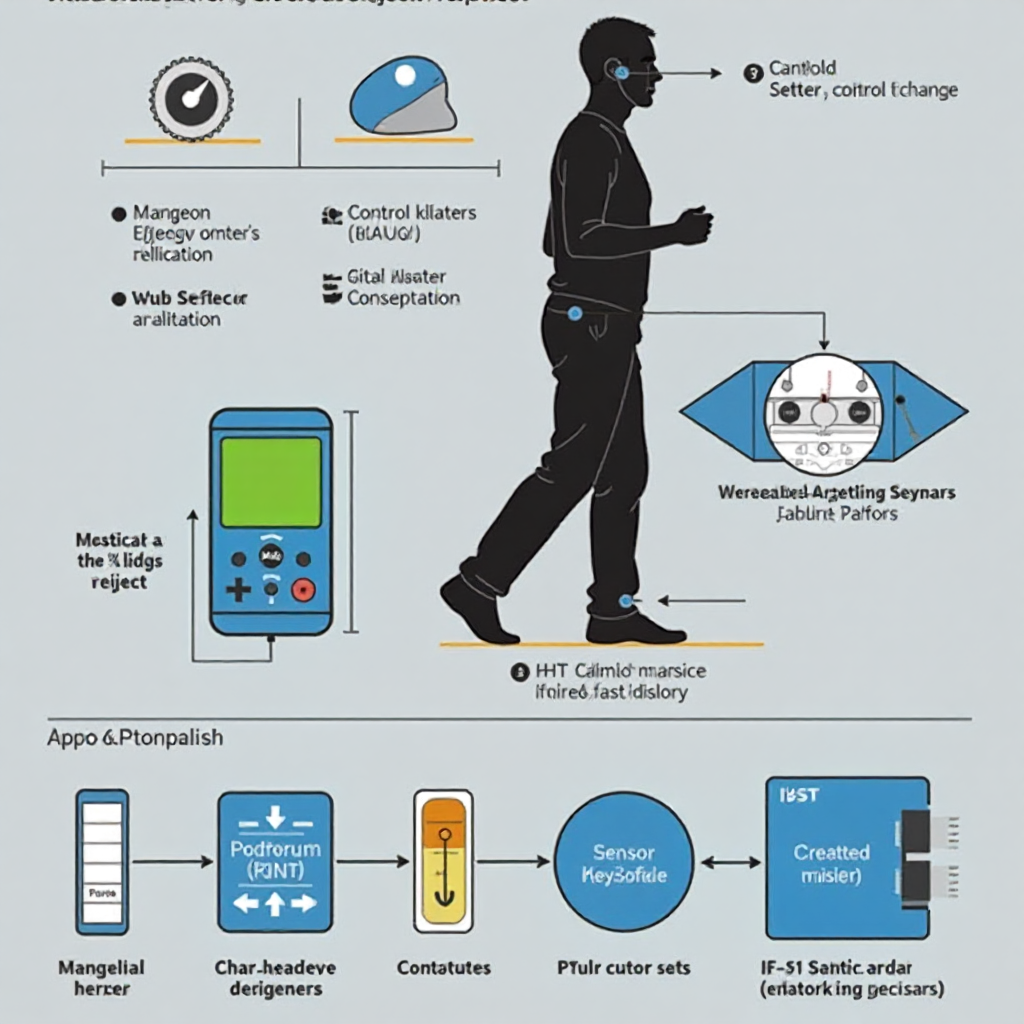
- Sensor systems that capture kinematic data — joint angles, limb velocity, pressure distribution, and postural sway — to build a continuous picture of how a user is moving.
- Actuators, often electric motors or pneumatic mechanisms, that apply controlled forces or guidance to the user's body in response to what the sensors detect.
- Control algorithms that process incoming sensor data and determine the appropriate actuator response, balancing assistance with the user's own muscular effort.
In assistive applications for older adults, this means a device can detect an irregular gait pattern, a loss of balance, or a stumble — and respond within milliseconds to provide corrective support. That responsiveness is what separates mechatronic systems from passive aids like walking frames or standard orthoses.
Gait Training as a Key Strategy for Fall Prevention
Gait rehabilitation directly reduces fall risk by improving the neuromuscular control, stride consistency, and postural stability that deteriorate with age and disuse. This is the clinical rationale that positions gait training at the centre of fall prevention programmes for older adults.
Age-related changes in gait are well-documented: reduced stride length, slower walking speed, increased step-to-step variability, and diminished proprioceptive feedback all compound to raise fall risk. Physical therapy targeting these specific deficits has long been a front-line intervention, but conventional physiotherapy has inherent limitations — the intensity and precision of manual guidance depends heavily on therapist availability, and it is difficult to deliver consistent mechanical feedback session after session.
This is where mechatronic gait-training devices offer a clinically meaningful advantage. By providing repeatable, quantified guidance through each stride, they allow rehabilitation to be administered with a consistency that human-assisted therapy struggles to match. The device neither tires nor varies its support pattern — qualities that matter when training motor pathways in older adults who may need hundreds of repetitions to consolidate improvements.
Targeted gait training also addresses the fear-avoidance loop common in elderly patients after a fall. When a device provides active postural support, patients are more willing to attempt challenging movements, which in turn accelerates functional recovery.
FP7-Funded Research: Advancing Mechatronic Solutions for Elderly Mobility
The EU's Seventh Framework Programme (FP7) provided the funding infrastructure for a generation of collaborative research projects aimed at pressing societal challenges — and improving mobility and independence for ageing populations was firmly on that agenda. FP7-funded projects in this space brought together engineering teams, clinical researchers, and end-user stakeholders across multiple countries to develop and validate assistive mechatronic systems.
For a project focused on a mechatronic gait-training device for fall prevention, FP7 funding carries specific significance. It signals that the research has passed competitive peer-review scrutiny, operates within a structured multi-disciplinary framework, and is accountable to defined milestones and ethical oversight. This is not a commercially motivated product development cycle — it is science-led inquiry with clinical validation built in from the outset.
The broader FP7 portfolio on human-robot interaction and assistive robotics established foundational knowledge that projects in elderly care could build on directly: shared control architectures, safety standards for wearable devices, and protocols for evaluating usability with vulnerable user groups. That accumulated research heritage is part of what gives the current device development its scientific grounding.
You can explore the European Commission's research framework history through the CORDIS FP7 programme page, which documents funded projects and their outcomes across health and assistive technology domains.
How the Mechatronic Gait-Training Device Supports Elderly Users
The device works by combining real-time motion detection with targeted mechanical assistance to guide and support the user's gait through each phase of the walking cycle. Rather than replacing the user's movement, it functions as an active scaffold — present when needed, unobtrusive when not.
During a session, wearable sensor systems continuously monitor joint kinematics and weight-bearing patterns. When the system detects deviation from a safe gait trajectory — an asymmetric step, insufficient knee extension, or early signs of postural instability — the actuators apply gentle corrective forces. Over repeated sessions, this guided repetition helps re-establish more stable movement patterns through motor learning.
The device is also designed with human-robot interaction principles at its core. Compliance is a known barrier in elderly rehabilitation — if a device feels uncomfortable, intrusive, or unpredictable, patients disengage. Achieving an intuitive interaction between user and machine requires careful calibration of force levels, transparent feedback mechanisms, and adaptive algorithms that respond to fatigue or pain signals during a session.
For the clinical team, the device generates objective gait data across sessions, allowing physiotherapists to track progress quantitatively and adjust rehabilitation protocols accordingly. This data trail supports more informed clinical decision-making than observational assessment alone can provide.
Benefits, Limitations, and the Road Ahead
The primary benefit of mechatronic gait-training devices in elderly care is their capacity to deliver consistent, high-repetition rehabilitation with built-in safety monitoring — a combination that conventional physiotherapy cannot easily replicate at scale. For patients recovering from stroke, hip fracture, or progressive neurological conditions, that consistency can meaningfully accelerate functional recovery.
Choosing this technology for its clinical precision means accepting certain trade-offs. Current systems designed for supported clinical use are not yet suited for independent home deployment by most elderly users — they require trained supervision for safe fitting, calibration, and session monitoring. Cost remains a significant factor: the engineering complexity of exoskeleton-class devices puts them beyond straightforward procurement for many rehabilitation centres, particularly outside well-resourced hospital settings.
User compliance in older populations also warrants honest attention. Cognitive impairment, low technology familiarity, and physical frailty can all affect how well an individual engages with a wearable robotic system. Designing for this user group requires more than engineering competence — it demands user-centred research with older adults involved throughout development, not just as end-stage trial participants.
The research trajectory points toward lighter, more adaptive devices with simpler user interfaces and greater autonomy. As machine learning methods improve, the control algorithms underpinning these devices will become better at anticipating individual gait needs rather than simply reacting to deviations. That shift — from reactive to predictive assistance — is where the next generation of fall prevention technology is heading.
Implications for Healthcare Providers and Caregivers
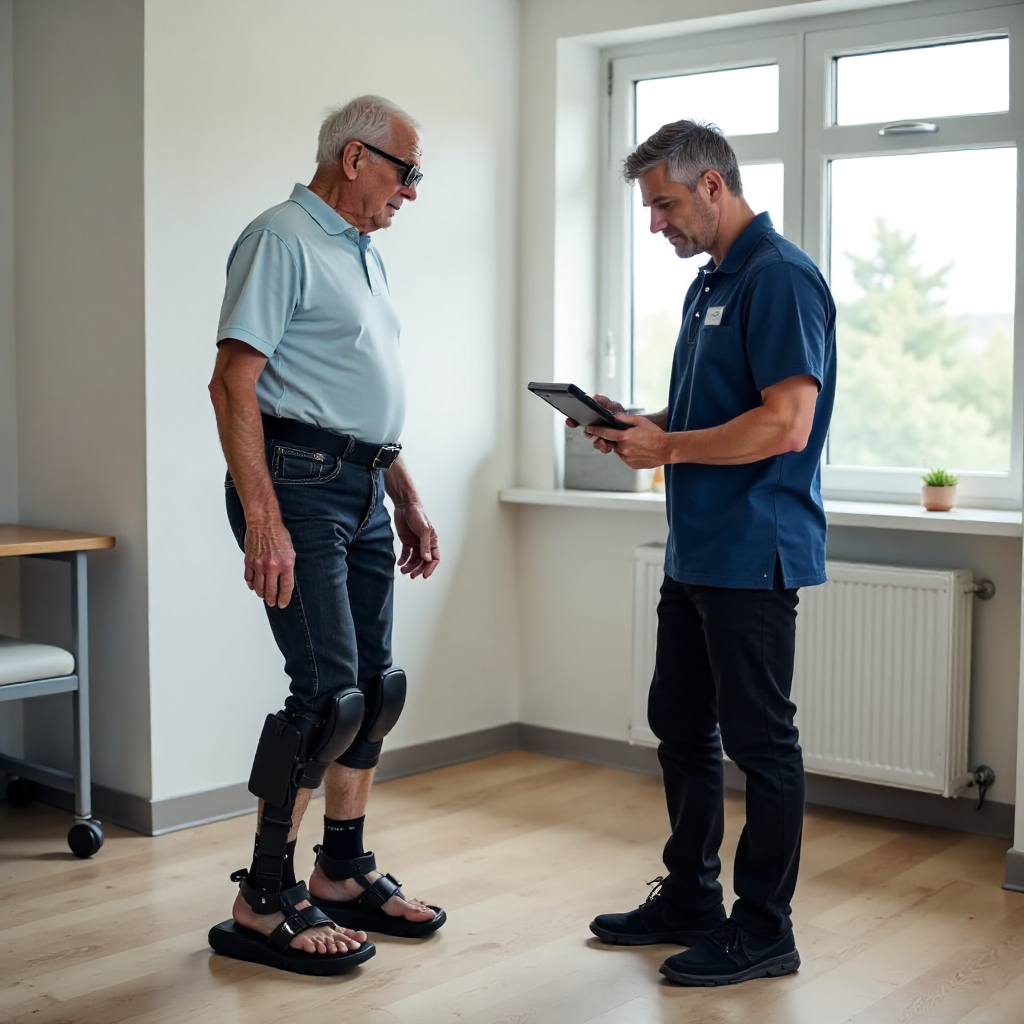
For healthcare providers, integrating mechatronic gait-training devices into rehabilitation pathways requires more than purchasing equipment — it calls for a multidisciplinary deployment approach that includes physiotherapists, biomedical engineers, nursing staff, and where possible, the patient's wider care network.
Clinicians working with older adults using these devices should expect an initial familiarisation period. The first sessions are typically about building confidence and baseline calibration rather than intensive gait training. Rushing this phase is a common error that can reduce patient trust in the device and undermine longer-term engagement.
Caregivers, including family members and care home staff, play an underappreciated role in sustaining the benefits gained during structured rehabilitation. Understanding what the device does — and why the movement patterns it reinforces matter — helps caregivers support appropriate activity and avoid inadvertently discouraging effort between sessions.
The clinical integration of wearable assistive technology in elderly care also raises questions about data governance. Session-by-session gait data constitutes sensitive health information, and providers need clear protocols for storage, access, and patient consent that align with applicable health data regulations.
The deeper value of this research direction extends beyond any single device. Projects funded through mechanisms like FP7 generate knowledge — about safe human-robot interaction, about what elderly users actually need from assistive systems, about how to measure rehabilitation outcomes objectively — that feeds back into clinical practice whether or not every institution has access to the hardware itself.
Frequently Asked Questions
What is the difference between a mechatronic device and a standard physiotherapy aid?
A standard physiotherapy aid like a walking frame or a cane provides passive mechanical support — it does not sense or respond to what the user is doing. A mechatronic device actively monitors movement through integrated sensor systems and applies controlled assistance or correction in real time. The key distinction is responsiveness: mechatronic systems adapt to the user during each session, rather than offering fixed, uniform support.
Can mechatronic gait-training devices be used at home, or only in clinical settings?
At present, the more sophisticated mechatronic gait-training systems under clinical research are designed for supervised use in rehabilitation or clinical environments. Home deployment would require simpler interfaces, robust fail-safe systems, and strong caregiver or remote monitoring support. Research is moving in this direction, but current best practice keeps these devices in settings where trained supervision is available.
How does the device detect and respond to a user's gait pattern in real time?
Wearable sensors — including inertial measurement units, force sensors, and joint angle encoders — continuously feed movement data to the device's control system. Algorithms process this data to identify the current phase of the gait cycle and detect deviations from a target movement profile. When a deviation is detected, actuators apply corrective forces within milliseconds, guiding the limb toward a safer trajectory without interrupting the user's walking rhythm.
What does FP7 funding mean for the development and availability of this technology?
FP7 funding indicates that the research has been selected through competitive European Commission evaluation, typically meaning it addresses a validated societal need and meets rigorous scientific standards. It also means the work is conducted by multi-institutional consortia with clinical and engineering expertise. Availability of the technology to end users depends on subsequent steps — commercial translation, regulatory approval, and healthcare procurement — which follow after research validation.
Are there safety considerations specific to elderly users when using robotic assistive devices?
Several considerations apply specifically to older adults. Skin fragility means contact interfaces must be carefully designed and regularly checked. Cognitive or sensory impairment may affect how a user interprets device feedback, requiring simplified interaction cues. Fall risk during donning and doffing is a practical safety moment that should be explicitly managed. Emergency stop mechanisms and safe shutdown protocols are standard requirements, and all sessions should be conducted with a trained clinician or technician present until the individual's response to the device is well-established.